Furniture, tiles, slabs, sanitaryware, doors, panels, glass, fittings and other project materials from several Chinese factories.
International Freight
Ocean FreightAir FreightFCL & LCL ShippingSamples & Small ShipmentsInternational ExpressChina Origin Services
Factory PickupSupplier CoordinationWarehouse ConsolidationCargo MeasurementExport Packing & CratingDestination Services
Export Customs DeclarationImport Customs ClearanceDDP Door-to-Door ShippingLast-mile DeliveryRequest a Freight Quote
FURNITURE, BUILDING & SANITARYWARE LOGISTICS
Balance volume, concentrated weight, breakage and project sequence before loading furniture and building products.
Furniture, tiles, stone, sanitaryware, doors, hardware and interior finishes are often sourced from several factories. Bulky pieces, concentrated weight, fragile surfaces and installation sequence must be planned together.
WHO THIS IS FOR
A solution built around the cargo, not a generic rate card.
For contractors, developers, design firms, furniture buyers, distributors and overseas customers consolidating furnishing and building products from China.
01Sofas, tables, cabinetry and project furniture02Tiles, slabs and stone products03Sanitaryware and bathroom fixtures04Doors, panels, interior finishes and hardware
TYPICAL FURNITURE, BUILDING & SANITARYWARE BUILD
Furniture, stone, tiles, glass and sanitaryware need different protection inside one project load.
Furnishing and building-material projects are planned piece by piece around volume, density, breakage, stackability and job-site unloading before the container or LCL load is assembled.

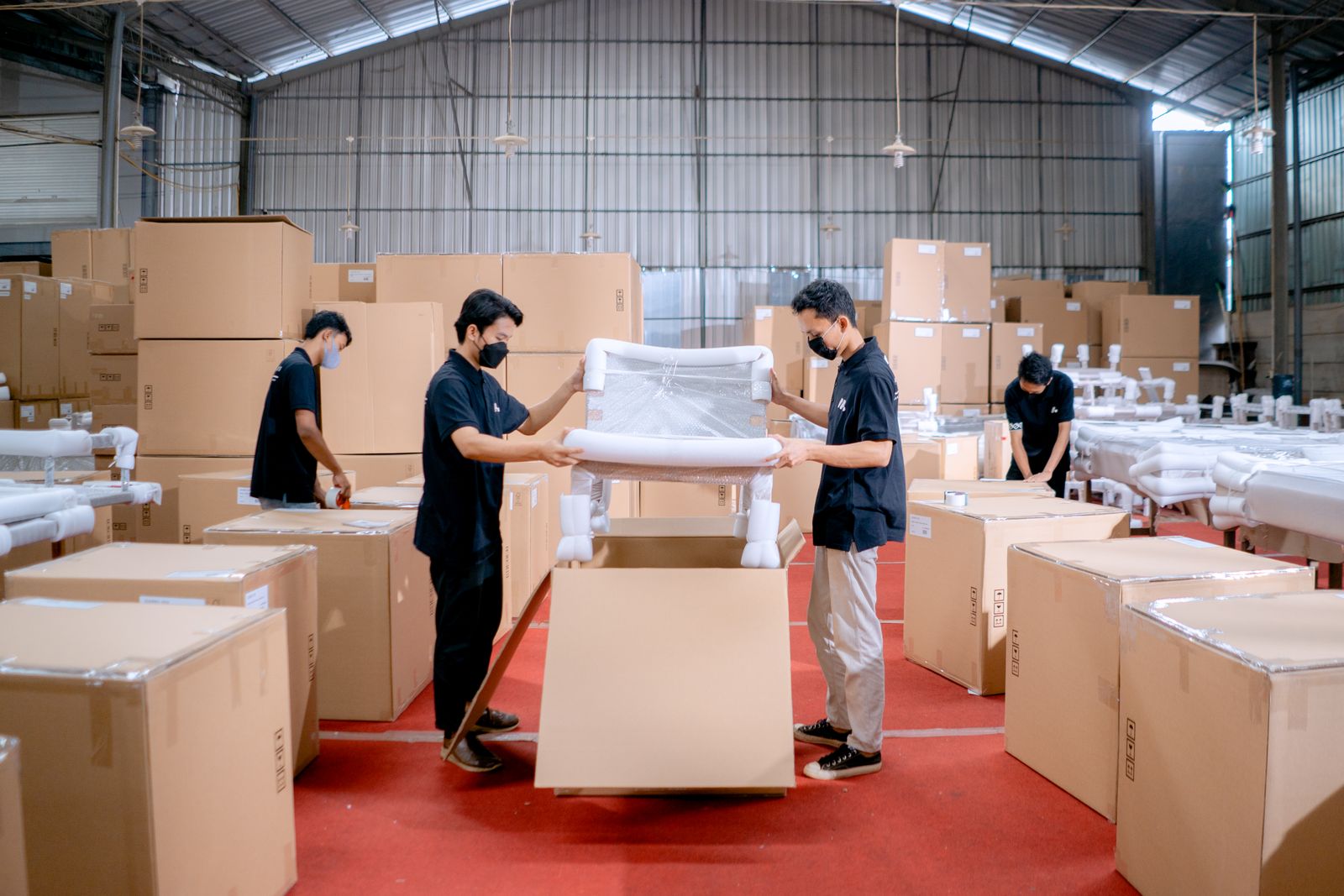 REAL CARGO + INDUSTRY CONTEXT
Unsupported stone, tiles with no edge restraint, sanitaryware moving inside cartons, overweight pallets and a site without unloading equipment cause the largest losses.
Keep slabs and glass upright in engineered frames, use edge protection and tight internal blocking, crate sanitaryware where needed and mark gross weight, lifting points and centre of gravity.
Use FCL when a controlled loading plan reduces handling; quote open-top, flat-rack or other special equipment only from confirmed packed dimensions and weights.
Confirm crane, forklift, road access, site appointment, unloading contractor and installation sequence before departure.
WHAT MAKES THIS CARGO DIFFERENT
The risks to resolve before pickup.
Heavy and fragile happen together
Dense tile and stone loads need weight control, while sanitaryware, glass and finished panels need shock and edge protection.
Container payload can be reached before volume
A visually half-empty container may already be too heavy or poorly balanced.
Project sequence is easily lost
Room, floor, lot and installation-zone labels must survive factory pickup, consolidation and delivery.
WWJ PLANNING METHOD
How the shipment should be built.
The exact carrier, service and customs scope are confirmed only after the real product, packing and destination are reviewed.
Build a supplier and material schedule
Map every factory, material, package, weight and installation zone.
Inspect pallets and crates
Check fork entry, edge support, internal restraint, solid-wood marks and stackability.
Engineer the load
Control payload, axle and floor loading, heavy-light balance and unloading sequence.
Prepare the job-site delivery
Confirm crane, forklift, dock, storage area and appointment conditions before dispatch.
TRANSPORT FIT
Compare routes after the cargo is classified.
ModeBest fitWatch carefully
Ocean LCLSamples, hardware and smaller protected lotsHeavy-item minimums and extra handling
Ocean FCLDense materials and consolidated project ordersPayload, floor loading and weight balance
Special equipmentLong panels, large slabs and oversized elementsLifting design and site access
PACKING
Protect the freight.
- Use engineered pallets or crates for dense and fragile materials.
- Protect corners, finished faces and unsupported ceramic or stone sections.
- Mark packages by supplier, material, lot and installation zone.
DOCUMENTS
Make the cargo clear.
- Accurate material and product descriptions
- ISPM 15 compliance for regulated solid-wood packing
- Destination material or project documents confirmed by the buyer
FIRST QUOTE
Send these details.
- Material and product schedule
- Package-level dimensions and gross weights
- Fragile faces and stacking limits
- Factory pickup cities
- Job-site unloading equipment and sequence
COMMON QUESTIONS
Questions buyers ask before this cargo moves.
Why can a container of tile reach its limit before it is full?
Dense cargo can reach the container or road payload limit while substantial cubic space remains. Weight distribution must also stay safe.
Can sanitaryware and tiles load together?
Yes, with a load plan that protects fragile sanitaryware from dense tile pallets and controls movement and unloading sequence.
Can materials from several factories be consolidated?
Yes. A supplier schedule and package-level weight data are needed before the container and collection plan is finalised.
REVIEW THE REAL CARGO
Send the product and packing details before choosing the route.
A product photo, supplier document or preliminary packing list is enough to start. Final acceptance and cost depend on the verified cargo and destination.
Request a cargo review